6.04.2010

06/03. Thu. Loooooooong night.

Ladies, ladies, ladies... Today at the gym there was a guy that looked like that:


Yup, I know.
But, oddly, I couldn't stop laughing because he was graciously dancing like that:


Soon after that, I learned some pretty useful things with the girls.
Life in the south can be pretty interesting.

How to Muffle a Fart
Step

  1. 1
    Sit down immediately. When you first feel the urge to fart, find the softest, cushiest couch and sit your bottom down. If the fart noises ends up being loud, the cushion will do a lot to muffle it.


  2. Step2
    Lean to one side inconspicuously. You only need to lean enough that you have your weight on one butt cheek. Then, scoot yourself so that when you put your other butt cheek down on the couch, the two are slightly spread apart from one another. When your cheeks are spread, the sound that comes out will only be air. Tight butt cheeks makes for a louder, higher sounding fart.


  3. Step3
    Go outside. Sometimes there is literally no soft place to sit. In this case, your best option is to go outside, or travel to a room with extremely high ceilings. Gymnasiums and galleries work great. The openness will muffle your fart so that even someone right next to you may not hear.


  4. Step4
    Surround yourself with a lot of people. This accomplishes two tasks. First, lots of people usually equals a lot of noise to muffle a fart. Also, if there are a lot of people, a fart sound could sound like it is coming from anyone. People may not know it was you.


  5. Step5
    Let the fart come out. Don't hold it back, this could make it squeak on the way out. Don't force your fart to come either. This could also be a disaster.

6.02.2010

Wed. 06/02. Animals.

Readings...
Intern orientation with four other interns.
Salad.
Readings...


Gym.
1 hr of kick-boxing.
10 min of tanning!
30 min personal trainer.


On the way home, I saw two cute little things that I hadn't seen in years!!
Well, hmmm, actually one of them is not so cute, but rather cool


If I stay long enough in the tanning bed will my hair get lighter?

June 1st. Tuesday. Kelli and Kathleen.


"That girl is so ugly she hit every branch on the way down from the ugly tree."

Learning southern English.


5.31.2010

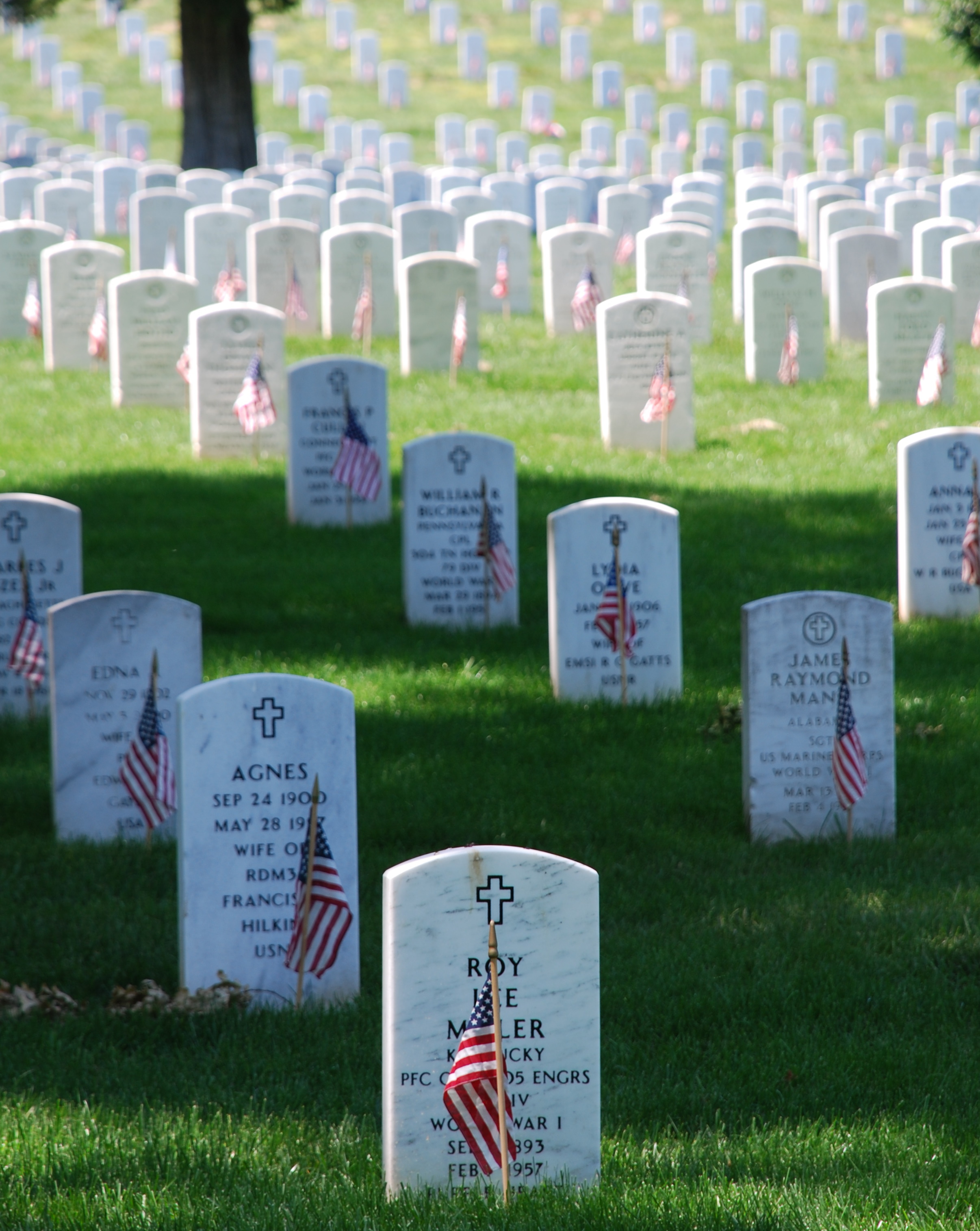
May/31. Monday. Memorial Day.

Memorial Day is a United States federal holiday observed on the last Monday of May (May 31 in 2010). Formerly known as Decoration Day, it commemorates U.S. soldiers who died while in the military service. First enacted to honor Union soldiers of the American Civil War(it is celebrated near the day of reunification after the Civil War), it was expanded after World War I to honor dead Americans from all wars. (from Wikipedia)


Also, day to update the blog. Day to go to Kilee's pool. Day to run away from the rain. Day to laugh with Kelli. Day to get ready for work.

May/30. Gaston Lake. Sunday.


05.29.10. Sat. City Tour.


I was soooooo scared. I guess I have seen too many bad horror movies. I thought I would be stuck in the bed. Or that it would catch on fire. Or that my hair would burn. Or that I would melt. Or that I would be locked in there and turned into barbecue. 

But no. After 6 minutes the door opened and I was out. With a little tan. As simple as that. I love it!

Kelli stopped by and took me for a city tour of the most interesting attractions: trendy bars, nice restaurants, good clubs. I have the perfect house mate. 

The afternoon was spent at her place where we finally told each other our most intimate secrets while enjoying ice cold beers and grilling chicken in the back porch. Bostonians have a lot to learn.

Friday. 28/May. Gym.

Reading.
Reading.
Reading.

Lunch was at a Mediterranean restaurant with other interns and young professionals. Great to meet new people.

Reading.
Reading.
Reading.

Gym. Gold's Gym. Sauna + pool + classes + weight lifting and a TANNING BED! I can't wait to come back tomorrow.

05.27.10. Thursday. Back to Raleigh.

Tired. Tired. Tired. And still with tons of things to do. Happy. I missed this.

The conference is over. Met a lot of people. Learned a lot. My networking mission was 80% successful. I met some Brazilians that were too funny and too nice for me to let go of them. Focus Kika, focus.

Back in peaceful Raleigh, Kelli was waiting at a grill + bar with some friends. She is adorable! I am glad I ended up in her house!

Being in Raleigh makes me feel like I am in a typical American TV series.

One of the friends is a cute cop who loves midgets. He eats a grilled cheese sandwich with jelly and has a glass of milk in between beers. And then a mini car suddenly parks outside right by our table.

I think I am going to like this place.


May 26. Housing. Wednesday.

GLOBAL HOUSING FINANCE AFTER THE CRISIS
Drawing the lessons, taking stock and building the future


Date: May 26-27, 2010
Location: World Bank Headquarters, Preston Auditorium
Organized by: Global Capital Markets Development Department Non-Bank Financial Institutions, World Bank and IFC Global Financial Markets Department


Overview: As the world begins to recover from the worst financial crisis since the Great Depression, housing finance markets are once again looking to the future. Since the crisis was originally triggered by the subprime segment of the mortgage market, this has led to the questioning of some well established premises of housing finance and a revision of the way to approach it, both at the policy and at the market levels. However, mobilizing finance for housing remains crucial and encounters the same challenges as before – rapid urbanization, growing populations, limited land availability, access for lower income groups and sources of long term funds. What impact had the crisis on how these challenges should be met? What should be the role of governments as policy makers and regulators? How can private markets develop in a sustainable way and channel capital to housing while following responsible and prudent lending practices?


The 4th Global Conference on Housing Finance for Emerging Markets, organized jointly by the World Bank and the International Finance Corporation (IFC), will address  the above questions and provide participants with a full picture of the post-crisis housing finance landscape across countries through a series of presentations focusing on the following six themes:

1.       Impact and Responses to the Crisis around the World
2.       The Changing Face of the Regulatory Framework for Mortgage Lending
3.       (a) Residential Rental Markets OR 3 (b) Prospects for the Mono-line Lending Business Model
4.       Responsible Lending to Lower Income Groups
5.       Mobilizing Savings for Housing
6.       Capital Markets for Housing – Post-Crisis Outlook.
    Join us to hear, benefit and share your experiences with leading specialists and decisions makers in housing finance.

    05/25. Tuesday. DC.

    So it turns out my house mate Kelli went to a wedding in Vermont and I haven't met her yet. She sent a friend of hers to pick me up at the airport on Sunday. He filled me in on the stories about everyone in town and took me for a walk in the grocery store. Scott, thank you, I really appreciate that!

    Monday, first day of work, was already busier than all of my working days in India combined. I will be working with a very talented team that gave me 500 pages to read and a lot of information to learn. Looking forward to it.

    Task #1: Networking at the 4th Global Conference on Housing Finance for Emerging Markets followed by Indian dinner at the Heritage India USA.


    Monday. 05/24. New home.

    This is where I will be working this summer.
    And below is how I found my new home. As a bonus, a great house mate.


    From Craigslist:
    I live in N. Raleigh in a 3 story, 2000sq ft, townhouse. Six Fork RD/Strickland Rd area right off of 540. About 15 min from downtown, or anything else in Raleigh. I live alone with my dog, who is very sweet. You would have your own bedroom with a private bath. Furnished or unfurnished! There is also a living area on the first floor, which includes a half bath, wet bar, and fireplace, but has nothing but a 27" TV. You are welcome to bring your on living furniture, if you would like your own private den.

    About me: I am a outside sales professional, and work from home when I am not traveling during the day. (My office is joined with my bedroom.) I do not smoke, I am a social drinker, and I am typically busy with friends on the weekends. And my friends are almost as fun as me... :-) I love to hang out and entertain, and I tend to be very spontaneous. i.e. I can plan a successful gathering or outing very quickly.

    Available immediately ~ through August. (Females only please)

    Please see photos below- Picture #2: 2nd level, looking front to rear. Picture #3: is the kitchen, which is behind the wall where there TV is located, #4 is the available bedroom. 


    image 1723008558-0image 1723008558-1
    image 1723008558-2image 1723008558-3

    May 23, 2010. Caps & Gowns. Sunday.

    “Good luck to you, for the sake of us all. Go and heal the world.”


    Leaving Medford as my friends anxiously waited in line for their turn to be seated was easier than I had anticipated. Perhaps because there were no hugs, no eye contact, no kind words, no pictures.
    One more semester. One less semester. Over 300 graduates desperately looking for jobs.

    Slowly, roommates #1, #2, #3... grabbed their belongings, packed their bags and followed their paths. The HoT House, with its tales and secrets, is now one more chapter in the story of our lives.  A chapter that ends with high hopes and expectations. And ending that is the start of a whole new book. 9 new books. or 10. Actually 11.


    As the new "Masters" throw their caps into the air, I land in a new territory.  My story takes place in sunny Raleigh, North Carolina. And yes, it is time to update the Blog. 

    5.13.2010

    Some tips for you guys!

    Brazilians just love foreigners and they will be happy to show you around. There are many different places to visit, it depends on what you want to do and see (great website http://www.biosferabrasil.com/destino.php?idioma=i). Some information to help you decide:
    And there are lots of other places… National flights are quite cheap, buses are excellent (and cheap too), there are no trains, and you can also drive around the country by car…

    4.19.2010

    The End of the Free Market, Q&A with Ian Bremmer


    A new book is on its way...

    Roubini: Your book suggests that an old trend, what you call state capitalism, has become much more important. What happened to change things?

    Bremmer: Over the past 18 months, the Western financial crisis and the global recession have accelerated the inevitable transition from a G7 to a G20 world. That’s not just a matter of more states at the bargaining table. It’s not just about having to herd more cats to get things done on the international stage. It’s about herding cats together with other animals that don’t really like cats. And that’s not really herding.

    The G7 world was one where everyone that mattered for growth in the global economy accepted the assumption that prosperity depended on rule of law, independent courts, transparency and a free media—and in the value of free market capitalism. In that world, multinational corporations are the principle economic heavyweights. This consensus has provided the engine driving globalization for the past 40 years.

    The sun has set on that world. The country that has emerged strongest and fastest from the global slowdown is one that does not accept the idea that a regulated free market economy is crucial for sustainable economic growth. China’s success has persuaded authoritarians around the world that they really can have explosive growth without undermining their monopoly hold on domestic political power. China has enjoyed double-digit growth for thirty years without freedom of speech, without well-established economic rules of the road, without judges that can ignore political pressure, without credible property rights—without democracy. And the events of the past 18 months have made China more important that ever for the future of global economic growth. This is a big change with enormous implications that we had better start thinking through.

    Roubini: The term state capitalism means different things to different people. How do you explain it today?

    Bremmer: I’m writing about a system in which the state uses the power of markets primarily for political gain. A country’s political leaders know that command economies will eventually fail, but they’re afraid that if they allow space for markets that are truly free, they’ll lose control of how wealth is generated. They could end up empowering others who will use markets to generate revenue that can then be used to challenge the government’s authority to dominate the country’s political life. So they use national oil companies, other state-owned enterprises, privately owned but politically loyal national champion companies, and sovereign wealth funds to exercise as much control as possible over the creation of wealth within the country’s borders. And they send these companies and investment fund abroad to secure deals that increase the state’s political and geopolitical leverage in a variety of ways.

    This system is fundamentally incompatible with a free market system.

    Roubini: Creating friction between the state capitalists and other governments. To say nothing of privately owned companies.

    Bremmer: Exactly, yes. In a free market system, multinational corporations are looking to maximize profits. In markets that are not intelligently regulated, and we’ve seen this in the United States, they're looking to maximize short-term gains at the expense of sustainable, long-term growth for their shareholders or for their own compensation. The past two years have reminded us of the sometime excesses of free market capitalism.
    In a state capitalist system-- the principle economic actors are looking first to achieve political goals. Profits are subordinate to that goal. In other words, if profits serve the state’s interests, they’ll pursue profits. But if the state needs a state-owned oil company to pay through the nose to lock up long-term supplies to the oil, gas, metals and minerals needed to secure the long-term growth that keeps workers in their jobs, off the streets, and the political leaders in power, profits and efficiency can become political liabilities and these companies will pay whatever it takes to get what their political patrons want.

    But the state-owned companies are competing with multinationals that won’t overpay, that can’t overpay. Here, the injection of politics into market activity distorts the outcome—in this case by raising the price that we all pay for energy and other commodities.

    Roubini: When you mention the state capitalist countries, which ones do you specifically have in mind?

    Bremmer: We find state capitalist powers among the Arab monarchies of the Persian Gulf-- Saudi Arabia and the United Arab Emirates are the most important. You see this trend, of course, in Putin’s Russia. There are other examples of countries that mix free market with state capitalist policies. But we wouldn’t be talking about state capitalism as game-changer for international politics and the global economy if it weren’t for China, now the world’s second largest economy and its fastest growing major marketplace.

    Roubini: "The End of the Free Market" is a provocative title. Are you trying to out-Doom me?

    Bremmer: You know I wouldn’t do that. But you have to admit, it’s not an exaggeration. It’s not that I think the United States is going to throw away its free market principles. It's not about President Obama being some kind of socialist. Washington will tighten the regulation of financial markets in coming months, and some people won’t like that. Americans will not lose their faith in the power of free market capitalism to generate prosperity. But that can’t be said for the rest of the world.

    The global economic system is no longer driven by consensus around these values. There are now competing forms of capitalism. You used the word friction. That’s exactly the right word. Friction, competition, even conflict. There will be winners and losers, and the world’s political and business leaders better begin to try to sort out who those winners and losers will be.

    Roubini: Do you mean that state capitalists will be winners and those who bank on free markets will lose?

    Bremmer: Not necessarily. We’re going to see governments around the world that no longer feel bound to follow the Western rulebook of decades past. We’ll see multinational corporations struggling to adapt, because foreign investment will become much less predictable and much more complicated. And the backing they get from their home governments won’t carry as much weight.

    Yet, some of them will be more successful than others at learning to compete on a playing field that isn’t level. There are very good reasons to doubt that the state capitalists will have staying power. But for now, they have lots of new clout and plenty of advantages. Over the next five, ten, twenty years, state capitalist governments and the companies and institutions they empower will be a serious—and global--force to be reckoned with.
    The threat for Americans is that all this is happening at a moment when people are struggling, and their elected leaders have every incentive to respond to that fear and anger with promises to throw up walls meant to protect them from all these changes. Americans have always prided themselves on tearing down walls, not building them. State capitalism and American populism will put that faith to the test.

    Roubini: Were you tempted to call your book "The End of Globalization?"

    Bremmer: No, this isn’t the end of globalization. It is the end of globalization’s singular, overriding power to shape our lives and the future of the global economy. Globalization depends on access to global consumer markets, capital markets, and labor markets. State capitalism compromises all three. Globalization still matters, and it will continue to matter for the foreseeable future. But it is no longer the fundamental driver of growth in a global economy that looks increasingly toward China for the next expansion.

    4.13.2010

    Aquarius, Tuesday, 13 April 2010

    Your target is proving as slippery as soap in the bath. The harder you try, the less success you seem to get. Make less effort. Be less bothered. Resolve to stop chasing opportunity and just wait until it comes along and presents itself to you. Will this ever happen? That depends on whether it's really an opportunity that you need to take advantage of. If it is, a magnetic, natural process of attraction will occur. If it isn't, you'll be better off without whatever it is that you now want. Either way, you may as well relax.

    http://www.cainer.com/

    3.13.2010

    13/03. Sat. Sis.

    Quer um presente diferente? Que tal uma cerâmica personalizada?


    http://www.adriana.tabacniks.nom.br/


    As peças acima são de criação da minha querida irmã.
    Aposto que ela vai ficar feliz em receber um pedido seu!
    adriana.taba@gmail.com


    3.11.2010

    03/11/10. Beta no Taxi Amarelo. Thr.

    11 de março de 2010 às 0:26

    triangle pose

    logo que cheguei em nova york e fui fazer uma aula de yoga, penei bastante com o nome das posturas e das partes do corpo. levei alguns meses para diferenciar queixo de canela, por exemplo – respectivamente chin (lê-se tchin) e shin (lê-se chin).

    mas se você chegar a nova york hoje – como turista, estudante ou trabalhador – já não precisa passar pelo mesmo perrengue. e ainda pode se dar ao luxo de praticar em sua própria casa (ou hotel). a brasileira roberta arruga, que estuda yoga desde 1998, dá aulas particulares de vinyasa flow tanto em português quanto em inglês.

    a aula pode ser feita por alunos de todos os níveis e tem trilha sonora gostosinha com direito a rolling stones e red hot chili peppers. bom, né? a boa notícia para quem não tem planos de vir pra cá em breve é que, antes do fim do ano, a roberta volta para o brasil – de vez – e vai continuar dando suas aulas privées.

    para mais informações, visite o blog dela ou mande um email para roberta.arruga arroba gmail.com

    curiosidade: a roberta e eu fomos colegas de classe quando tínhamos 10 anos de idade. a gente se re-encontrou em ny por causa de uma amiga em comum, que me contou que fazia yoga em casa com uma professora chamada beta arruga. o mundo é um ovo… um ovo de codorna!

    picture-12
    (roberta arruga)

    2.26.2010

    26/02/10 - Sexta - Kika na Revista!


    Matéria da "Kika Caminhando na India" na Revista Ouse! Já nas bancas!!!l

    2.19.2010

    Horoscopo. 19/02/10. Sexta.

    Quem me conhece, entende.

    Aquarius, Saturday, 20 February 2010
    Daily, Yesterday, Weekly, Monthly, Year Ahead

    Your Week Ahead: You know some very strange people. It is almost as if you are a magnet for oddballs and eccentrics. Somehow they know that you will accept them as they are. Your life would be quieter without these characters, but it would also be a lot less interesting. This week you are getting caught up in a drama that you really don't have to be involved in. Reserve the right to pull back if it all gets too silly. Give it a chance, though. Somewhere in the world of the weird and the wonderful, there is an opportunity that you could benefit from. It could even translate into a very useful way to make your life more comfortable and pleasurable.

    2.09.2010

    10/02/10. 75 anos. Wed.

    Em 2009 Fletcher comemorou 75 anos.

    Para eternizar as lembranças, selecionamos 75 estórias que mostram a interconectividade de ex-alunos em suas respectivas áreas de atuação ao redor do mundo.

    Reproduzo aqui as que eu escrevi.

    Overseeing the Financial Services Industry

    Paulo Bilyk F’92, from Brazil. Peter Ackerman, F’69, PhD alum, from the USA.

    Paulo, CIO and founding partner of Rio Bravo, an independent asset management firm. Peter, Managing Director of Rockport Capital Incorporated, a private investment firm.

    Previously, Paulo was a partner and executive director of Banco Pactual, which he joined as a financial analyst in 1992 and was responsible for building the bank's M&A advisory group. Formerly, he worked at Itautec Informática with the US Department of Commerce and Department of Defense.

    From 1978 to 1990, Peter was Director of International Capital Markets at Drexel Burnham Lambert where he structured, financed, and invested in hundreds of recapitalizations. Since its inception in 1990, Rockport has made numerous direct investments in fields as diverse as movie libraries, publishing, propane distribution, textiles, custom labeling, wax refining, auto part remanufacturing, variable life insurance, and internet-based food retailing.

    Paulo, board member of the Magda Tagliaferro Foundation for piano education in Sao Paulo, board member at the Incheon Center for International Cooperation and Exchange (ICICE), an NGO that promotes the city of Incheon, in South Korea, as a hub for international cooperation and exchange.

    Peter, chairman of the International Center on Nonviolent Conflict, member of the board of the Council on Foreign Relations, and member of the US Advisory Council of the US Institute of Peace.

    Paulo, the president of AME Campos, a community organization dedicated to social and cultural advancement in Campos do Jordão, Brazil.

    Peter was the executive producer of Bringing Down a Dictator, the Peabody award-winning documentary that chronicled the fall of Slobodan Milosevic in Serbia.

    Both are members of the board of overseers of the Fletcher School; to which Peter is the Chairman.


    Cross-registration. 09.02.10. Tue.


    Estudantes da Fletcher podem fazer 1/4 de suas aulas na Harvard, no MIT ou em outras universidades parceiras.

    Neste semestre, sou cross-registrant em duas matérias:

    Do mundinho pacato na fazendinha saltei para a bela Cambridge na zona urbana. Ao invés dos 4 minutos de distância entre minha casinha branca e a sala de aula, passo 40 minutos a olhar pessoas e vitrines e volto a ser contabilizada como usuária de transporte público.

    Passo a desfrutar de um mundo novo, professores fantásticos e aulas sensacionais.

    As matérias na Harvard tem gostinho de maçã roubada.

    12.31.2009

    31/de/2009. Acabando...

    Sempre desprezei as coisas mornas, as coisas que não provocam ódio nem paixão, as coisas definidas como mais ou menos, um filme mais ou menos, um livro mais ou menos.

    Tudo perda de tempo.

    Viver tem que ser perturbador, é preciso que nossos anjos e demônios sejam despertados, e com eles sua raiva, seu orgulho, seu asco, sua adoraçao ou seu desprezo.

    O que não faz você mover um músculo, o que não faz você estremecer, suar, desatinar, não merece fazer parte da sua biografia.

    (trecho de “O Divã”)
    Martha Medeiros

    12.29.2009

    30.12.09 Finzinho...

    Me perdi nos dias da semana. 


    Longo ano.


    Reveillon tranquilo com pap's em DC. Mal imaginava o ano que me esperava.
    4 meses em um alojamento estudantil e na biblioteca da Fletcher em Medford. Vida nova. Escola nova. Interrupção de uma semana de férias nas praias da Flórida...
    2 semanas com os amigos queridos no Brasil, 3 dias em Brasília, um fim de semana sem ver a praia em Maresias e um concurso no qual não fui aprovada.
    1 dia em Boston, só para trocar de mala.
    3 1/2 meses na Índia, acompanhados de perto por desconhecidos.
    5 minutos de fama no Tas.
    4 meses in the House of Ten (the HoT house) in Somerville, interrompidos por 10 dias em um casamento em Porto de Galinhas e uma semana em Fernando de Noronha, a realização de um sonho.
    Alguns dias em SP.
    Kika Caminhando na Índia está farofando no Guarujá e poderia adicionar umas 10 páginas a cada um dos itens acima.


    Longo ano.
    E ainda faltam 2 dias.

    12.03.2009

    12/04/09. Continuando...

    Tenho deixado meus comentários por aqui:
    http://news.fletcher.tufts.edu/reflections/

    ....

    Tá me dando uma vontade de voltar a escrever.

    ....