9.23.2009

22 de set. Terça. Vali Nasr.

Proud students of the Fletcher School gathered in front of TVs as the night got colder in Boston, to praise and honor the Daily Show’s guest on September 22. Born in Iran, Vali Nasr accumulates the titles of professor at Fletcher, adjunct senior fellow at the Council on Foreign Relations, senior fellow of The Dubai Initiative at Harvard University’s JFK and advisor to Richard Holbrooke, a key US diplomat.

Author of “Forces of Fortune”, Prof. Nasr believes that a prosperous Muslim middle class will bring stability and democracy to the Middle East, mirroring the transformations that took place in the modern West. Worried about future terrorist attacks, this leading thinker about the Middle East and the Islamic world brings into the main state a religious, but capitalist middleclass-based force. According to him, the rise of capitalism and trade were responsible for the success of modernity and democracy and market-based economies in the West. He believes that these same forces will also transform the Muslim world.

Vali Nasr cites the example of Turkey, where a religious businessman is directly doing trades with European manufactures and knows that jihad might have negative effects on his business. The market and self economic interest exert important pressures into this powerful emerging class. However, in order for them to obtain reasonable tariffs and be able to negotiate internationally, the American Congress must cooperate. It is necessary to sacrifice things and provide open markets for goods that would encourage economic growth in the Muslim region.

The modern Iranian businessman, be it a religious person or not, is willing to play by the rules of the market. In past generations, the West was a synonym of morals and values, and this thinking has given way to a more money centered ideology. The decision to modernize now is completely business and economic oriented. Being westernized does not mean that secularism is good or bad, or that the Western is cool. It is simply the way by which they can have a more active presence in the economic field. Important to remember that they are not necessarily our friends, but they are willing participants in the economic global order.

Prof. Nasr has contributed to The New York Times, The Washington Post, and Time and he has appeared on Anderson Cooper 360, The Situation Room, Fareed Zakaria GPS, The Today Show, and Charlie Rose. Also written by him, “The Shia Revival” was a New York Times bestseller.

9.20.2009

20 de set. Domingo. Visita.


Aproveitei a visita do primo André e fui conhecer a cidade de Boston. It was about time. Almoçamos no charmoso bairro Little Italy e fizemos um passeio de ônibus que se transforma em barco e navega no rio. Um tanto quanto patético. Porém, divertido. Fiquei feliz em vê-lo e conversr um pouquinho sobre os amigos em comum. Boa viagem de volta e muita sorte e força durante os próximos meses.

Sábado. 19/set. Típico.

Típico sábado brasileiro: acordar tarde, feijoada, churrasco, sorvete e filme.

Pedro Fiuza é amigo querido de SP, 2nd year do MIT. Organizou uma deliciosa feijoada no terraço de seu prédio, habitado por outros 5 ou mais casais de brasileiros. Gente bonita, papo interessante, Ivete bombando, couve e laranja. Parabéns Pedrinho e que esta data se repita por muitos e muitos anos!

Fim do dia, tarde de preguiça em casa. Os meninos organizaram um churrasco, fizeram Bloody Mary, a Caroline comprou sorvete e nos aconchegamos na sala para assistir Clerks.

I love this house!

18 de setembro. Sexta. Varanda.

A varanda. Ponto de encontro dos moradores do primeiro andar. Recinto onde ficam jaquetas e sapatos sem dono. Local de se tomar uma cerveja e fumar um cigarro ao cair do dia, onde se joga conversa fora e se debatem importantes teorias. Onde se fala de política, de religião, de viagens. Onde se reclama do tempo, dos professores, das aulas. Onde se debate o sistema de saúde americano, o ano novo judaico, a cidade de Boston. Onde se fala de sonhos e decepções. Onde se criam esperanças e se analisa o passado.

Qui. 17/09. July.

Que felicidade em receber um telefonema da minha baixinha querida.
Que gostoso rir e gargalhar até doer a barriga.
Que alegria em ouvir as estórias dos amigos.
Que saudade imensa dos abraços e beijos.
Que bom saber que estão todos bem.
Que aperto no coração ao desligar o telefone.
Que vontade de pegar o próximo avião rumo a SP.
Que falta fazem.

9.16.2009

Political Risk. Wed. 16/09.

Como se não bastassem as aulas e tudo o que as acompanham: leituras, cases, trabalhos em grupo, apresentações, projetos, memorandos, op-eds, resumos, problemas and so on... A vida acadêmica é repleta de eventos e eventos e eventos.

Um deles, recém-saído do forno, uma conferência sobre risco político que estamos organizando. Quem estiver por perto, fica o convite.

Managing Political Risk: A Cross-Sector Conference on Political Risk Measurement and Mitigation

Conference Theme
Engendering cross-sector discussion on political risk mitigation techniques through moderated panels on corporate strategy, business intelligence, and timely political risks that face international investors, such as resource nationalism. A comprehensive conversation on political risk mitigation will also feature panels on investment and trade services that require political risk analysis, such as investment and trade finance, investment guarantees, and political risk insurance.

Summary
Political risk mitigation techniques have become strategic components to enterprise risk management as uncertainty surrounding government regulation, expropriation, currency inconvertibility, and political violence becomes more common in today’s volatile economic environment. This conference will create a platform to host industry leaders to discuss the most salient political risks to investments in the emerging markets. An interdisciplinary approach resonates with The Fletcher School’s strength in bridging academic and professional expertise in business, law, finance, conflict resolution and natural resource policy.

The Center for Emerging Market Enterprises and the Fletcher Political Risk Forum at The Fletcher School, Tufts University will provide a forum for the dissemination of ideas and best practices on political risk mitigation for business professionals and graduate students in business and international affairs from the Boston area. Attendees will include corporate risk managers, investment managers, financial and country analysts, underwriters, and academics, amongst others.

http://fletcher.tufts.edu/PoliticalRisk09


9.14.2009

15 de set. Terça. Muuuuuuu.


Saudade das vaquinhas...

14 de set. Monday. 1 semana.

David. Roommate #4. Por enquanto, meu favorito. Fala besteira, brinca com todos, ri de mim, reclama de tudo, me pentelha o dia inteiro, dá conselhos sobre as aulas, conversa sobre tudo, adora Gossip Girl e não confia nas máquinas de lavar roupa americanass. Dou risada com ele o dia todo. Importado da Bélgica, sem dúvida, essencial para minha felicidade durante esta primeira semana em terras novas. Alegra meu dia. Principalmente quando reclama tanto da calça antiga que está larga, é curta, feia, sem graça. Calma, calma, David, pode usar uma minha emprestada. E não é que ficou bem melhor? Feliz da vida, sinal de que está uns quilos mais leve, foi tomar cerveja e fumar seu cigarrinho.

13/09. Dom. Blakeley BBQ.

Blakeley é o dormitório dos alunos da Fletcher, onde fiquei hospedada no primeiro semestre. No meio do prédio, tem um delicioso jardim, palco de conversas e aventuras. Foi lá que Ivan nos brindou com um delicioso churrasco. Ops, com um delicioso churrasco americano. Agora sim. Pão, tomate, queijo e um mega hamburguer. Catchup e batata frita para acompanhar. Calma, calma, tinha uma super salada de folhas verdes, azeitona e tomate. Tarde agradável. Na frente do prédio tem uma quadra de baseball, onde bixos e veteranos arriscaram uma partida de futebol.

Partay!! Sab. 12/09/09.

Alunos orgulhosos e receptivos que somos, transformamos o porão em pista de dança e abrimos as portas da casa para nossos calouros! Jordan (roommate #1) comandou o Mac, ligou as caixinhas de som e fez os futuros diplomatas se requebrarem! Recém-chegado à HoT, aquisição celebrada pelos antigos moradores, que agora têm um carinho especial pelos tão difamados MIBs (Master of International Business). Nicholas (roommate #2), um dos únicos que eu conhecia antes de ser selecionada para habitar a HoT. Foi essencial na minha escolha para ocupar o quarto vazio do primeiro andar. Morou no Japão, mas tem as raízes na bela cidade de San Francisco, do outro lado do continente. Aparentava ser um pouco mais reservada, Caroline (roommate #3) foi uma das primeiras pessoas com quem eu conversei logo que cheguei em Medford no semestre passado. A pista de dança ficou pequena! E HoT house even hotter!

9.13.2009

09/11. Friday. Convocation.

The Fletcher School of Law and Diplomacy: Convocation ceremony marking the beginning of the school year, followed by a reception in the Hall of Flags.

A foto é emprestada de outra escola, mas o objetivo é partilhado. Aos 1st years, o início de 2 longos anos, onde nada permanece igual. Aos 2nd years, o começo do fim. Aos Januarians, bom, uma cerimônia no meio do caminho.

A mensagem, refletida nas vestimentas engraçadas de professores queridos e no olhar saudoso de alumni orgulhosos, que celebram seus 50 anos de formados e observam com carinho os novos alunos, é inspiradora. Tradição e uma quantidade enorme de conhecimento inundam o auditório e incitam a vontade de aprender, salientando o comprometimento e companheirismo entre todos.

Mensagem especial do Dean Bosworth: estude, estude, aprenda e, acima de tudo, have a great time!

9.11.2009

10 de set. Quinta. Frio.

Enquanto o ar gelado invade nossa casinha em Boston, a chuva inunda a vida dos moradores de Delhi. O trajeto para meu trabalho, do lado oposto do mundo, demorava 1h30, agora dura mais de 3h00.

Por aqui, a cada 3 metros, 2 abraços. Por todos os lados, 1st years perdidos. Dúvidas e dúvidas: onde tem uma ATM? como faço para imprimir? onde eu posso ver o jogo? quem recomenda este professor? onde comprar livro? alguém quer vender livro? quero uma impressora! que roupa usar no frio? faz muito frio? de onde você é? o que você faz? o que você quer fazer? ONU? ONG? Governo? setor privado? já esteve no Brasil?

No hall de entrada uma tela singela mostra as fotos que tiramos para recepcionar nossos futuro substitutos. Bem vindos à Fletcher, onde o mundo se encontra em algumas salas de aula na pequena Medford.

Qua. 16/9. Beer Pong.

Descobri que existe até site oficial de jogadores de Beer Pong. Nada contra, típico americano.


Diretamente da Wikipedia:

Beer Pong (also known as Beirut) is a drinking game in which players throw a ping-pong ball across a table with the intent of landing the ball in a cup of beer on the other end. The game typically consists of two two-player teams and multiple cups set up on each side set up in triangle formation. There are no official rules, so rules may vary widely, though usually there are six or ten plastic cups arranged in a triangle on each side.

The goal of the game is to eliminate the other teams' cups before one's own cups are eliminated. When a ball lands in a cup, which are generally 1/4 to 1/3 full, that cup is eliminated and the defending team must consume all of the beer inside that cup.

The losing team must consume all the beer remaining in the winning team's cups. The order of play varies – both players on one team shoot followed by both players on the other team, or players on opposite teams can alternate back and forth.

9.08.2009

8/9. Terça. HoT.

Fim de novela, mas a vida continua.

Estranho voltar para Boston, mais ainda para Somerville, cidade organizada e brilhante. Dia de desempacotar caixas, transportar cama, abrir mala, lavar banheiro, limpar cozinha, correr em volta do lago, tirar pó, abraçar os amigos, ouvir estórias e contar contos. Nossa casa reúne 10 pessoas (House of Ten = HoT house) que estiveram caminhando por diversos países. Riqueza acumulada de experiências e vivências, faltam horas no dia para relatar os fatos.

How was your summer? Pergunta frequente ao reencontrar os colegas.
Do you have three hours? A resposta que vem à minha cabeça sempre.

Aproveito a tranquilidade da região, respiro com prazer o ar fresco que cerca as ruas limpas e organizadas da pacata Somerville. Fico feliz ao procurar um agasalho na mala recém-aberta.

'Shopping day" marca o início das aulas na Fletcher. Dia de ouvir professores explicarem o porquê de seus cursos, relatarem experiências passadas e contarem suas expectativas e planos para o semestre. Cursos quase 100% selecionados - nosso currículo é bastante flexível - acho que vou deixar para fazer as aulas de Harvard no próximo semestre... Ainda a ser definido.

Gostoso voltar à realidade interrompida por diversas lembranças de um verão na Índia.

9.07.2009

7/set. Segunda. Independência.

O último capítulo da série "Kika Caminhando na Índia" coincide com o dia da independência de nosso querido país.

Fila de check in, mala super pesada, overweight, USD 50, exchange de rupees que sobraram, fila de security check, raio x, detector de metais, fila de banheiro, telefonema, mensagem, fila para boarding, inspeção de segurança, detector de metais, sapatos off, mensagens, fila para entrar no avião, bagagem de mão, poltrona, cinto de segurança, travesseiro, cobertor, sapatos off. Phone off. Lights off.

Domingo. 6 de set. Estranho.

Não sei se choro ou sorrio.

Choro por mais uma despedida. Deixo outra pátria que me acolheu com respeito, em grande parte, e amor, de algumas pessoas. Choro por deixar a família Mehtas que me recebeu com braços abertos e se despediu com um abraço apertado. Choro pela distância que passa a existir entre o Pankaj e eu, que tanto me ensinou e me encheu de carinho. Choro pelo fim da novela e a volta à realidade. Choro durante o almoço de despedida no Punjabi e quase vomito com o shot de vodka + batata em um pãozinho redondo. Choro ao arrumar as malas e ver o quarto vazio, a casa sem cores, o varal sem roupas. Choro em pensar que a casa nova deve estar uma imundície sem fim, e nem consigo pensar na situação do banheiro. Choro em lembrar que as músicas, os filmes e os seriados seguem comigo. Choro com o abraço carinhoso do Victor, chef to restaurante mexicano Sanchoz. Choro em deixar pessoas queridas e choro ainda mais em pensar nas estórias a serem contadas e nos fatos vividos deixados à distância. Choro com as músicas ao caminho do aeroporto. Choro ao me aproximar d0embarque no aeroporto internacional de Delhi. Choro com o abraço apertado do Pankaj.

Sorrio pela sensação de dever cumprido. E comprido. Sorrio pela realização do desafio, pela perseverança e força de vontade, que eu nem sabia que tinha em tanta quantidade. Sorrio por não ter ficado com diarréia. E nem com malária ou gripe dos porquinhos (que, pelo visto, está pior no Brasil). Sorrio pelo conhecimento adquirido, pelas novas amizades criadas, pelo fortalecimento ainda maior das antigas. Sorrio pelo auto-conhecimento desenvolvido. Sorrio pela tatuagem que fiz da deusa Ganesha, apesar da dor pulsante. Sorrio ao ver o gigantesco sorvete de hot fudge. Sorrio em pensar na casa nova, que será enfeitada com lembranças indianas. Sorrio com as novas músicas, os filmes e seriados que seguem comigo. Sorrio com as palavras queridas do carinhoso Victor, chef do Sanchoz. Sorrio em pensar que verei outras pessoas queridas. Sorrio com as estórias a serem contados, os fatos e acontecimentos vividos. Sorrio ao me aproximar do aeroporto internacional de Delhi. Sorrio ao acenar goodbye.

O ar quente e agora úmido, a poeira refletida nas luzes amarelas dos postes, o barulho estridente das buzinas me relembram a noite em que pousei na Índia, 104 dias atrás.

Sáb. 5/9/9. Acabando...

A novela Kika Caminhando nas Índias aproxima-se do fim.

Despeço-me da Índia com um gostinho do Brasil em uma apresentação de samba no Qba em Connaught Place (CP) em Delhi. Tive a oportunidade de praticar um pouco do português, ao som da bateria (DJ) animada por 4 dançarinos. Show curto, 3 músicas, produção pequena. Suficiente para acelerar o coração e trazer um sorriso no rosto dos indianos e expats que assistiam ao espetáculo e de alguns corajosos que arriscaram uns passos tímidos.

Começo a olhar as pessoas e os ambientes com a sensação de que é a última vez. Sentir os cheiros e guardar na memória as cores e os barulhos, que aos poucos deixam de fazer parte do meu dia-a-dia.

Boston, quase do outro lado do mundo, contrastes.

9.05.2009

4 de set. Sexta. Ganesha.

Jenny: Kika, você vai fazer o quê hoje?
Kika: vou com o Pankaj a um tattoo parlor, ele está pensando em fazer uma tatuagem. Quer ir?
Jenny: pode ser. Eu ia a uma pedicure, mas gosto de tattoo parlors.

3 horas depois.
Jenny: caraca, eu acabei de fazer uma tatuagem!!!

Hoje é dia de Ganesha, e no sul do país , milhares de indianos oferecem uma estátua à deusa, colocando-a no mar, à la Iemanjá. Ganesha é o símbolo das soluções lógicas, e deve ser interpretado como tal. Seu corpo é humano enquanto que a cabeça é de um elefante, e ao mesmo tempo, seu transporte (vahana) é um rato. Desta forma Ganesha
representa uma solução lógica para os problemas, ou "Destruidor de Obstáculos". Sua consorte é Buddhi
(um sinônimo de mente) e ele é adorado junto de Lakshmi (a deusa da abundância) pelos mercadores e homens de negócio. A razão sendo a solução lógica para os problemas e a prosperidade são inseparáveis.

Dia de resolver detalhes: levar a calça da Jenny para o alfaiate, escolher uma mala gigante para a Kika conseguir voltar, tomar Diet Coke, enviar as camisetas do Gui e o saari do Fedê pelo correio, comer grilled sandwich do mercado , comprar Vogue India para as amigas, tomar Diet Coke, devolver o Lonely Planet ao boss da Jenny, comer snacks indianos até vomitar, gravar filmes e séries no hard drive, bater um papo com os Mehtas (nossos inquilinos), guardar a estátua da Ganesha que ganhei deles com muito carinho, levar a Jenny ao aeroporto, bate-papo e sono. Menos um Fletcherite. Em breve, vou eu.

Quinta-feira. 3/set. Boliche.

Estou gostando desse negócio de férias em casa.

Café da manhã e ar condicionado. Ê, vida boa. Acidione a isso, chocolate de côco, de trufa e creme com vinho. Ivan e Amie seguem de volta aos EUA. Mais um Fletcherite que se vai. Fim de noite, boliche.

Boliche, uma das atividades mais sem graça na minha opinião. Além de ser difícil e complicado acertar aqueles pininhos super distantes com uma bola gigante, não se pode torcer, vibrar e também não cansa. Esporte estranho. Se é que é esporte. Como tudo na India, o som bombando impede que as pessoas conversem. Ponto positivo: fiz 3 strikes seguidos. Até que não é tão ruim assim.

***************
Update: Aos iniciantes como eu, deixo uma citação valiosa do Bira Teodoro, que pode transformar radicalmente sua experiência com o boliche. Bastam apenas duas ou três dicas para qualquer amador ficar entusiasmado com o esporte. E sim, não só é esporte, como o segundo mais praticado do mundo. Dicas em www.boliche.com.br, que conta com um manual grátis para iniciantes. Leitura programada. Volto a treinar em breve.

Quarta. 02/09. Ivan's Birthday.

Ivan, companheiro da Fletcher, veio nos visitar acompanhado de sua namorada, Amie. De acordo com ele, dia perfeito.


Começamos com um típioco filme de Bollywood, Love Aaj Kal, cujo elenco conta com a brasileira Giselle Monteiro, modelo de 19 anos. Música, dança, ator bonitão que canta sem camisa e corre na chuva, a mocinha linda e perfeita. Filme que mostra o contraste entre o casamento tradicional indiano e a nova realidade dos jovens. Triste, bonito, engraçado, piegas.


Seguimos para um delicioso almoço de aniverário no Qba, um dos meus restaurantes favoritos em Delhi.


Enquanto Ivan e Amie expolaravam o cair da tarde no romântico Qtub Minar, Pankaj e eu fomos atrás de um bolo e velas chinesas. Sim, o Ivan adora uma flor que se abre com o calor das chamas e toca Happy Birthday to You.


Todos reunidos em casa, a noite foi agradável e nos divertimos com a felicidade do aniversariante diante das velas animadas.

1 de set. Terça. ObaOba da Índia.

Atualizações:

Ambientes em Delhi
  • Turquoise Cottage (Pria): diz que toca rock. O DJ ainda está aprendendo a mixar. Metade do que consta no cardápio não existe. Ou seja, sorria e dance, podia ser pior.
  • Blanco (Khan Market): restaurante que vende óculos de sol. Caipiroska só no Brasil, não adianta tentar. Excelente comida.
  • American Diner (Indian Habitat Center): para aqueles momentos saudosos de hot dog, bacon e ovos.
  • No India Habitat Center também existe um food court com deliciosos pratos e snacks indianos. Tempero suave, nada muito picante para agradar o paladar dos diplomatas e estrangeiros.
  • Pizza Hut: saboreie uma pizza indina de paneer com borda de queijo e peça um dos coloridos mocktais extremamente doces e artificiais.
  • F-Bar (Hotel Ashok): se tiver com vontade de dançar, é para lá que eu recomendo! Conta também com um excelente restaurante onde pedi um a porção de brócoli e queijo às 4h am.
  • Barista (South Ex): rede de lojas à la Starbucks. A filial de South Ex. tem um lindo ratinho branco que perambula entre as mesas. Uma fofura.
  • 3 Ks: excelente ambiente escondido acima do Mc’Donalds. Telão para acompanhar as partidas de tênis.
  • Lodi Garden Restaurant: aconchegante, ambiente externo, poltronas, árvores. Ótimo lugar para o fim do dia.
  • Urban Pind: tem o melhor Long Island Iced Tea da cidade! Às quintas, ladies night – free beer and mojito! Dance no Segundo andar e refresque-se (ou esquente-se) na varanda do último andar.
  • The Village: combinação de 3 ambientes (restaurante, bar e “lanchonete”). Parece um pouco antigo, comida sem graça, muito frio. Não gostei muito.

Noida
  • Elevate: música eletrônica. Um pouco longe de Delhi, mas vale o trajeto.
  • The Great India Place: tem uma loja de doughnuts deliciosos no food court, em frente a uma barraquinha com smoothies de manga. Recomendo jantar no Friday’s, divertido e aconchegante.
  • Spice Mall: shopping antigo, lotado, com um cinema 4D que joga água na sua cara e ventinho nas pernas. Interessante. No food court, tem uma barraquinha central com um delicioso garlic bread e um restaurante chinês chamado Spice World com uma decoração estranha e cerveja quente.

Gurgaon
  • Turquoise Cottage (outra filial): restaurante temperado com um bom rock. Ambiente tranquilo.
  • Friday’s (Metropolitan Mall): vixe maria. Se fosse uma rede de restaurantes eu duvidaria da sua autenticidade. Arroz estragado, drink péssimo, só o bolo do aniversário do garçom que merece um pequeno elogio.
  • Wildfire (the Crowne Plaza): $$$, mas ótimo para afogar a saudade do Brasil no buffet de saladas e rodízio de carne. Sim, sim, carne vermelha. Único restaurante brasileiro na região.
  • Potpourri (Ambience Mall): comida típica de Goa, região colonizada por portugueses. Pao e sopa ilustram o saboroso cardápio.
  • The Jungle – Safari (Ambience Mall): não prestei muita atenção na comida tamanho minha distração com a girafa e demais animais que enfeitam as árvores artificiais do recinto. Estranho. Divertido.
  • Galaxy Hotel: em frente ao escritório da CapitalConnect. Tem um café italiano com o mais saboroso bolo de chocolate da região. No andar de cima, Howzatt, bar temático de esportes que traz um prato de veggie delicioso. Tem sua própria cerveja.
  • Firangi Pani (Ambi Mall): às quintas, happy hour de 3 por 1. Lugar estranho.

Saket
  • Spaghetti: fazendo jus ao nome, restaurante italiano que serve uma pizza deliciosa.
  • The Punjab Grill: um dos melhores restaurantes. Ao final da refeição, serve-se um shot de pan com sorvete de creme. Delicioso.
  • Azzurro: um dos favoritos. Recomendo para um jantar agradável regado a vinho.

CP
  • Casa de doces que eu esqueci o nome: dizem que tem o melhor fudge da cidade. Sim, derrete na boca, e se você relevar o leve gosto amantecado, é uma delícia. O chocoloate de truffle, por outro lado, é sensacional.
  • United Coffee House: um dos primeiros restaurantes da região, cardápio ilustrado por belas fotos antigas. Uma das melhores refeições.

Lajpat Nagar
  • Golden Fiesta: o melhor grilled sandwiche da cidade. Fica ao lado do mercado central em Lajpat Nagar Part II.
  • Haldiram: excelente loja de doces e snacks indianos. Recomendo o takeaway, ou vá descansado pois come-se de pé.
  • Vendedores de frutas na rua: tome um refrescante suco de pomegranade que também ajuda a prevenir o câncer.
Pôxa, estou orgulhosa de mim. Tô sabendo de tudo já. Por outro lado, já deu para imaginar que tudo que eu emagreci no campo de meditação, voltou em dobro né? Ai ai... segunda começa o regime!

9.03.2009

Seg. 31 de agosto. Golden Temple.

Os Sikhs, frequentadores do Golden Temple em Amritsar, são reconhecidos à distância: não cortam cabelo nem barba (por isso o turbante), e levam um pente pequeno para desembaraçar as longas madeixas, carregam sempre um punhal (ou uma faca) para se protegerem, usam uma calçola comprida e tem uma pulseira no braço direito. Cerca de 40.000 seguidores e turistas visitam o templo diariamente, onde homenageiam o livro sagrado, cantam, rezam, meditam, almoçam, banham-se nas águas sagradas ao redor do templo e dão uma cochiladinha no fim do dia. Juntamo-nos aos demais 39.996 e passamos algumas horas no templo. Tivemos o privilégio de ajudar na cozinha, onde Adam, mais audacioso, sentou junto aos cortadores de côco. Os demais, ficamos na ala das louças. Foi o mais próximo que me senti da linha de produção que estudei nas aulas de economia. Impressionante a organização, dependente de voluntários e fiéis.


Debaixo de chuva, visitamos o Jallianwala Bagh, recinto onde ocorreu um dos maiores massacres da história. Números variam, mas a estimativa mais sensata é de que cerca de 1500 indianos foram assassinados por soldados britânicos. Diz a história que era proibido reunir-se em locais públicos. Difícil apurar os fatos, ainda marcados por balas de revólver nas paredes de barro.

9.02.2009

Dom. 30/08. Amritsar.

Se no fim de um arco-íris tem um pote de ouro, não tenho muita certeza. Mas ao final dos 447 km e das 9 horas que separam Delhi de Amritsar, existe um templo de ouro chamado Golden Temple. E foi lá onde eu, Jenny, Pankaj e Adam passamos algumas horas de nosso domingo e da segunda-feira.

A cidade de Amritsar fica ao lado da fronteira com o Paquistão, onde, diariamente, ocorre a "cerimônia de fechamento do portão" - sim, é isto que separa as duas nações, uma cerca de arame farpado e dois portões, cada país tem o seu. A cerimônia é um dos eventos mais bizarros e estranhos que já presenciei, uma mistura de Fla x Flu sem bola, onde os soldados parecem cheerleaders de high-school da terra to Uncle Sam, e têm todos seus movimentos que parecem uma luta bem engraçada e nada muito eficiente acompanhados por centenas de pessoas do lado de cá e algumas dezenas do lado de lá. Entre os dois países, sai vitorioso aquele que gritar "oooooooooooooooooooo" por um tempo maior. Dura cerca de 40 longos minutos, durante os quais os indianos gritam e uivam palavras de vitória e encorajamento. Interessante.

Dormimos acompanhados de alguns insetos no hotel mais sujo que eu já vi em toda minha experiência hoteleira. Contive-me, pois a vontade de brincar com o ratinho, carinhosamente apelidado pela Jenny de "gato" era imensa. Longa viagem, longo dia. Vishram karo. Vishram karo.

9.01.2009

Niver da minha irmã. 29/ago. Sáb.

Irmãzinha querida, um beijo no coração e que esta data se repita por muitos e muitos anos. Desejo toda a felicidade do mundo na nova casinha de vocês. Boa sorte com o projeto, tenho certeza que vai ficar lindo! Estou aqui torcendo ao lado de milhares de deuses indianos e mandando muita energia positiva para vocês, para o Tom e a Lolita.


Ontem à noite fomos comemorar as férias no Cafe Morrison em South Extension II, o começo de tudo. Extendemos para o Elevate, em Noida. Música eletrônica, onde muita cerveja tem o mesmo efeito que no Brasil.

Após um delicioso almoço no Punjab Grill, um dos meus favoritos em Delhi, assisti o melhor filme da temporada na Índia: the Taking of Pilham 1 2 3. Recomendo.

8.28.2009

28/ago. Sexta. Fim de expediente.

Escrevo durante os últimos 30 minutos de CapitalConnect. Uma nova despedida se acumula nas idas e vindas da Kika. Despeço-me com a publicação da primeira Newsletter, um breve resumo das atividades realizadas durante estas 13 semanas. E foram longa semanas.
Vou com a sensação de dever cumprido. Deixo sugestões, recomendações e agradecimentos em uma longa avaliação sobre o summer internship.

Do ambiente de trabalho, não vou sentir falta dos almoços nada criativos acompanhados de discussões em hindi sobre filmes e piadas de coworkers. Não vai me incomodar ficar sem as constantes quedas de luz e a conexão de internet um pouco mais lenta que o trânsito de Delhi. Também não vou sentir muita saudade dos olhares feios logo após o expediente das 18hs - horário de fechar o escritório. Talvez sinta falta da lanchonete do térreo. Ainda não sei ao certo se vai ser do Iced Tea, feito à base de xarope e água gelada misturados em um copo de plástico ou do brownie que tem uma pitada de gosto de chocolate. Do trajeto, Delhi - Gurgaon e retorno, das longas horas diárias percorridas entre estas duas cidades e dos carros vindo em diversas direções, ah, este sim vai fazer falta.

8.26.2009

27 de agosto. Quinta. UOL Horóscopo.

"A partir de hoje e até a Lua cheia de 4/9, você vive um período de expansão e facilidades. Aproveite para fortalecer sua rede de apoios, circule por ai, faça com que seus amigos saibam como você os valoriza. Não há medo que não possa enfrentar ao lado deles. Transcenda isso."

Homesick.

Quero ver meu amigos, minha família, as pessoas que eu amo. Que falta fazem.

Atualizado em 02/set: problem fixed! O Pankaj - aquele das vacas, sabe? - descobriu onde fica o único restaurante brasileiro da região de Delhi e me levou para um delicioso jantar. Problema resolvido.

8.25.2009

Ago/26. Quarta-feira. Butterflies.

A cidade de Gurgaon está repleta de uma miríade de borboletas amarelas sobrevoando os carros que correm na expressway Gurgaon-Delhi.

Diversos pontinhos amarelos e brancos se divertem enquanto nós caminhamos rumo ao dever social.

A paisagem dançante faz o trânsito parecer relevante.

Transeuntes apressados e distraídos seguem em seu mundo interior, sem perceber o animado espetáculo que ilumina a quarta-feira sem cor da cidade de Gurgaon.

25 de agosto. 13 dias. Terça.

A etapa Kika Caminhando na Índia se aproxima do fim. Reparei recentemente que fazia muito tempo em que eu não tinha tanto tempo livre e nada para fazer. Não preciso me preocupar com casa, carro, seguro, convênio de saúde, multa de trânsito, rodízio, emprego, chefe, cliente, faculdade, aula, trabalho, projeto. Também não penso mais em presente de casamento, festa de aniversário, almoço de família, encontro de amigos, viagem à praia. Devido ao fuso horário, deixei de falar ao telefone, conversar por smn, mandar email para a galera. Sim, sim, muita coisa faz falta. E sim, tenho outras preocupações: o que escrever no blog de hoje? que foto colocar? será que faço outro vídeo? onde quero ir hoje? o quê quero visitar? onde vou comer? E sim, já estou saturada de algumas peculiaridades de Delhi: calor, poeira, trânsito, olhares estranhos, roupas indianas cobrindo o corpo todo. Mas descobri que estou me preocupando muito menos com as outras pessoas, mesmo porque não entendo nada o que falam. Durante o almoço no trabalho, nas primeiras semanas, eu me esforçava para fazer pergunta, criar uma conversa. Atualmente eu sento e saboreio minha nada criativa comida indiana (Rs 20 por dia, delivered to the office todo dia). Também desisti da idéia de conhecer os co-workers e ficar amiga deles. Fico quietinha no meu canto, cuidando da minha vida. Sim, sim, monótono às vezes. Em 13 dias, tudo muda.

8.24.2009

Aug/24. Monday. Amigo no Tibet.

Galen Murton, amigo querido, participação especial.

What I did on my Summer Vacation: Two weeks in Tibet

Fourteen days is not a lot of time, but it is sufficient to see a difference in Tibet. In less than one afternoon, actually, it quickly becomes apparent that things in Lhasa have changed more in the past two years than they had over the previous decade. The last time that I visited Tibet was in 2007 and despite earnest efforts one year ago, no alien travel permits were to be granted during the Olympic summer-Tibet was closed to foreigners. And so, on the first of August this year, it was with great expectation that I walked across the Friendship Bridge between Kodari and Zhangmu, between Nepal and Chinese Tibet. It would be my seventh trip to the Plateau.

This time I was most curious to see what had changed along the road, in conditions and provisions, from the border on up to the capital. I also wanted to witness for myself the general situation in Lhasa, something I had heard and read a fair bit about. Could I gain a better sense of what precipitated the protests and riots that erupted across Tibetan counties in five Chinese provinces in 2008 and again, to a lesser degree, in 2009? How to explore and address these issues despite the sensitivity, and risk, in talking about such things while in Tibet itself?

Prior to leaving for Lhasa, I spent just over one month trying to repair my Tibetan language skills in Kathmandu, Nepal. And right before that, I had the better part of a week in Dharamsala, India to interview resident Tibetan intellectuals, NGO leaders, refugees young and old alike, and a number of government officials. Over the course of that six weeks, I researched both Beijing and Dharamsala’s respective (and conflicting) positions on current, and historical, political realities in Tibet. With members of both local and expatriate communities, I gained insight into the recent decline in refugee arrivals as well as heard reports on conditions north of the border. Mr. Thubten Samphel, the Central Tibetan Administration’s Secretary of the Department of Information and International Relations, told me that the number one cause of recent Tibetan unrest was the unyielding development of Tibet, and the consequential and inverse threat to traditional culture that it posed. Was this really the case? And was any reversal to that trend in sight? So I set out for Lhasa to see for myself.
The Friendship Highway from the border town of Kasa (also known as Dram or Zhangmu) to Lhasa is a feat of engineering and an example of the change prevalent throughout Tibet. Sealed blacktop for hundreds and hundreds of kilometers makes for a smooth and pleasant drive, despite traversing some of the most inhospitable terrain around. This well-maintained road is especially conducive to the swift transfer of goods and the rapid mobilization of military units, which is just the way Beijing wants to keep it. I last traveled the highway in 1999, reaching Lhasa after three days on bone-jarring and gut-breaking dirt tracks, divided by frozen streams, in the way-back of an outdated Landcruiser. Of course, ten years is a lot of time, especially to the watch of Chinese development, so perhaps it should come as no surprise just how much the road has improved. But before even entering Tibet and crossing to the north slope of the Himalaya, the expanding Chinese presence and influence in Nepal was evident. Roadside shops along the Arniko Highway from Kathmandu featured more Chinese goods than I had ever seen before. Granted, the road on this side was still maintained according to Nepalese standards-as in, not so well. But once over the border, and beyond the massive, new Chinese wholesale-trade warehouse just up the hill from the Friendship Bridge, the road was spectacular-astonishingly so.

Most towns along the Highway had a new and different feel as well. Kasa is bigger than ever before, Shigatse is barely recognizable save for the old market around the Tashi Lumpo Monastery, and Gyantse has resumed its early 20th century position as a trade waypoint along the commercial corridor between China and India (via Lhasa and Sikkim). One place that still felt ‘Tibetan,’ however, was Tingri, with men driving horse-drawn carts ferrying villagers between market and home, women in faded, homespun aprons bargaining over butter prices, and snot-nosed kids kicking empty soda bottles along the edge of the streets. It was dusty and unswept, entirely devoid of white-tiled facades and blue-glass windows, like China had forgotten all about it. Why hadn’t this little, old crossroads tradepost experienced the Chinese change? I’m not quite sure, and it was refreshing (although it’s probably just because Shekar, or New Tingri just down the road, is more or less now yet another unrecognizable town). Lhasa, on the other-hand, was a very different story.

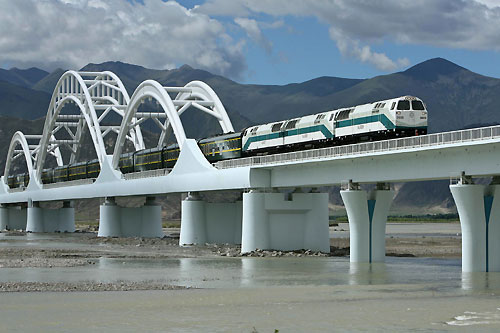
Approaching the city in the late afternoon, I was initially shocked by the urban sprawl to the west side of Lhasa. Then the billboards advertising Japanese and American luxury vehicles caught my attention (note-China may be the only place that Buicks still sell). Six-lane highways and flyovers near the new railway station, and a bridge that looks like it’s out of the future, came next. There is a new Special Economic Zone to Lhasa, so that it can grow and grow just like Shenzhen. And amidst this ‘New Lhasa,’ old women struggle to cross roads which run through what used to be their barley fields. But finally, upon arrival at the true heart of Lhasa, between the Potala Palace and the Jokhang Temple, within the Lingkor Road and to the Barkor Market, the latest developments are to be found.

Here, the latest conditions include armed military details stationed at every street corner 24/7, six-troop patrols marching up and down the lanes of the old town in synchronized step, and watchmen standing sentry on rooftops adjacent to all ‘sensitive’ zones like the Ramoche and Jokhang Temples (which happen to be two of the most sacred sites in Lhasa as well as the focal points for past protests). But saddest of all are the beggars, men, women, and children alike, who populate the streets in unprecedented numbers. Word is that the authorities banned all begging in Lhasa last summer, concerned that hordes of travelers straight from the Olympic Games would be put-off by such supplicants. Of course, the travelers never came, the gates were finally opened, and the beggars returned en masse. One might say that in Tibet, begging isn’t stigmatized like it is in the west, as the Buddha himself was a beggar. And if you can make a better living by pan-handling than farming, well, why not do it? Nevertheless, and despite this rationale, it is still disturbing to encounter such untold numbers resorting to a livelihood of desperation.

Over the course of the few days that I was able to spend in Lhasa, visiting the holy sites, meeting old and new friends, and walking about the town, I realized that Tibet really had changed more between 2007 and 2009 than it had between 2007 and 1999. Granted, experiences over the course of only one decade are certainly limited, but some of the most significant events in recent memory have indeed occurred in just the past few years. Specifically, there are three interdependent components to the change in Tibet that I see as having created the volatile dynamic which now radiates from Lhasa: the train and the transference of people and material goods; the expansion of commercial roadways between Tibet and the Subcontinent; and the commodification of a ‘mystical Tibet’ to both the Chinese and Western consumer.

Just as Beijing intended, the opening of the Qinghai-Tibet railway in July 2006 heralded a huge step towards modernity for the Tibetan Plateau. But at what cost? Each day, the train runs from six major Chinese cities with thousands of passengers, including Mainland laborers, Han tourists, and to a small extent, foreign travelers. When I rode the train to Lhasa in 2007 there were never more than a handful of westerners in each hundred-person carriage, and it was nearly impossible to get a ticket. The train is the adventurous way to reach China’s wild west, and it has grown in the traveler’s imagination (or bucket list) from Shanghai to Seattle. And for good reason, as it is an absolutely spectacular ride. However, what has gained far less attention are the many trains that run north from Lhasa back to the Mainland, loaded with raw materials such as iron ore and old growth lumber to fuel China’s prodigious growth. And this is to say nothing of the reports of uranium deposits up on Tibet’s Chang Tang wilderness.

The Tibetan rail-line is currently being extended westward to Shigatse (Tibet’s second city), and reports in the Nepali press have mentioned Chinese offers to hasten the construction of a complementary line to Kathmandu. The rails in China’s far western (and equally restive) Xinjiang Province already reach beyond Kashgar, close to the intersection of the Indian, Pakistan, and Afghan borders. What a strategic system it will be when (quite likely within a couple years) China’s railroad circumnavigates the Tibetan Plateau and connects with the great Xinjiang track, running nearly parallel to the border with its two nuclear neighbors as well as the Russian-linked Central Asian states. Such a line will ultimately provide an ideal network to support military maneuvers as well as the transport of products and people between the Mainland and China’s western provinces. It is the new Silk Road, run by trains rather than camel caravans, and the goods are no longer porcelain, silver, and gunpowder but rather plastics, copper, and oil.

A significant detail that was conspicuously absent from the fanfare of the Tibet railway’s maiden voyage in 2006 was the concurrent re-opening of the one and only commercial border-post between China and India via the Nathu La in Sikkim. This trade route was immortalized by the infamous British Younghusband expedition’s march to, and massacre on, Gyantse and passage to Lhasa for trade negotiations in 1903. From then until the 1950s, it was the primary trade route between India and Tibet. However, with the ‘opening’ of Nepal by 1951 and the Sino-Indian wars of the 1960s, Nepal’s Friendship Highway became the primary corridor for trade between Chinese Tibet and the Subcontinent, and the historical Sikkim route was closed for half a century. But then in the first week of July 2006, upon the advent of the train to Lhasa, Beijing and New Delhi quietly celebrated the long-awaited re-activation of the Sikkim crossing. And as a result, it is now possible to transfer goods overland from Shanghai to Calcutta in less than one week: 2-3 days by train to Lhasa followed by 3-4 days by road to India (indeed a far shorter time than the multi-week passage through the South China Seas and Singapore’s Malacca Straits). This post is currently the only direct, commercial link between the world’s largest nations and it will no doubt gain a prominence not unlike the Khunjerab Pass which links Pakistan and China (and also like the Khunjerab Pass, the Nathu La sits in close proximity to Chinese and Indian militarized zones). Ultimately, the modernization of these historical trade routes is a critical component of the liberalization of the East and South Asian markets, a constantly expanding bazaar that includes half of humanity (over 3 billion people).

In addition to this single commercial border at Sikkim, China has successfully built and sealed roads across the Tibetan Plateau which follow other ancient trade routes through the Himalaya to Nepal and India. As such, it will not be long before paved roads extend from Tibet down to the southern plains of Nepal and onwards into India. The route nearest to completion is at Kyirong-Rasuwa in the mountainous region north of Kathmandu, although Nepal has yet to formally open their section of the highway. In Lo-Monthang, in the Mustang Kingdom of western Nepal, reports are that Chinese vehicles can already be found in the capital of Lo (and Chinese beer and sneakers have been available there for years already); Nepal has nearly completed its respective road from Pokhara to Jomoson and northwards into Mustang. The third point at which China has reached Nepal’s border by pavement is in the extreme west at Purang-Taklakot, along the ancient pilgrimage route for the Hindu Yatra to Mt. Kailas. However, while Nepal has a road from its northwestern town of Simikot to the border with Purang, it will no doubt be some time before vehicles can make the drive south to Darchula and Nepalganj. Nevertheless, work is underway. And, finally, the road in the extreme-west of Tibet, from Ali and Rutok to Ladakh in Kashmir, India, is reportedly completed as well. Once open, this route will be the closest international crossing to the disputed and militarized zone of the Aksai Chin. As with the ongoing development of the train network, these roads have a strategic benefit both commercial and military: Chinese troops stationed at permanent, and road accessible, frontier posts across Tibet can better monitor increased trade traffic and stand ready for deployment along China’s sensitive borders.

Through the commodification of cultural traditions, the military and commercial development of the Plateau has been overshadowed by the more obvious Chinese effort to popularize (and populate) Tibet as a Himalayan exotica. Beijing’s policy on Tibet has gone far beyond resettlement of the frontier as ‘Tibetanness’ is extremely popular and readily marketable. The place is hot, and now it’s only a train ride away. Similar to the Western romanticization of Tibet, China has skillfully branded Tibet with an aura of mystical enchantment, a heritage that can be bought and sold on the Roof of the World. The wisdom of the lamas, the purity of the lakes, the grandeur of the mountains, and the innocence of the people are there not only to be experienced, but better yet, to be purchased. And the campaign has certainly worked, as Chinese tourists now outnumber Westerners in Tibet close to 50:1. But it’s not just the experiences that are so well marketed, as consumer products from the ‘Land of the Lamas’ are uniquely popular for their healthful benefits. These include walnut oil (organic!) found on the shelves of Mainland supermarkets and the famous (and lucrative) caterpillar fungus, yartse gumbu, reputed to increase virility and credited for the gold medal performances of numerous Chinese Olympians.

In addition to these commercial products is a nascent, and growing, interest in Tibetan Buddhism amongst the Han population. Tibetan lamas have found great success, and support, teaching in Taiwan and Hong Kong, and are discovering increasingly captive audiences in Shanghai and Beijing as well. The Tibetan ‘mystique’ has captured the Chinese heart and mind, and such interest, should it run deeper than empty consumerism, could be the best chance for Tibet to be ‘saved.’ Today, there is significant foreign interest in and support for Tibet; but what Tibet really needs right now is homegrown advocacy based in the Han Chinese population. However, this also leads to Beijing’s great dilemma: how to simultaneously promote the business of ‘Tibetanness’ yet reject the Tibetan claim to a separate and distinct identity-the real threat of nationalist ‘spilittism.’

Following my time in Lhasa, I flew to the town of Gyalthang in far southeast Tibet to see what things were like in a Tibetan area outside of the Tibet Autonomous Region. Here on the edge of Kham in Yunnan Province, where Tibetans and other minorities such as Naxi and Bai have intermixed and mingled with Han for many centuries, I found ‘Tibetanness’ to be as popular, and commodified, as ever. Gyalthang is also the town that Chinese authorities officially renamed ‘Shangri-la’ some years ago, and it is indeed a pleasant and beautiful place. But does it merit the name immortalized by James Hilton in ‘Lost Horizon,’ where enlightened monks live timelessly beneath snow clad mountains and all is fruitful and serene? Well, they gave away free beer in the central square before locals and visitors together commenced the nightly dance party, singing and stepping in a happy and collective circle (seems pretty close to Paradise to me). It’s also worth noting that as silly as it may appear to officially title a town ‘Shangri-la,’ it is by no means unprecedented in the region. In the 17th century the 5th Dalai Lama ordered the nearby town of Jol to be renamed Dechen, which means ‘supreme bliss’ in Tibetan. And it remains the name to this day. So, it seems that the Chinese officials were merely trying to update things according to tradition.

Amidst this scene, the local community’s aptitude for selling their colorful traditions was evident, as any- and everything Tibetan was marketed aggressively (and again, the tourists bought it up, with Han Chinese far outnumbering western visitors). As a sign of the capitalist times, even the local monasteries had gift shops in their lhakhang temples. And yet their altars also featured large portraits of His Holiness the Dalai Lama, whose likeness is of course strictly forbidden in other Tibetan regions. So, despite my misgivings of the commercialization of these religious institutions, their authenticity was certainly legitimate, quite simply for the position, in bold prominence, of His Holiness. Considering these policies, Gyalthang/Shangri-la has been touted as the ‘success story’ of the Tibetan region, where religious practice and commercial business can share the same side of the street (if not the same room). It is also the only Tibetan region in China that did not result in protests and uprisings in the spring 2008, a balance where rich Tibetan traditions bring in the crowds but ethnic identity does not threaten unrest. And so it seems that Beijing is happy, but are the Tibetans?

Many Tibetans and Westerners alike are distraught by the commercialization of the Plateau as well as the massive influx of Chinese tourists to Lhasa and other Tibetan regions. And understandably so, as it threatens the traditions, and very existence, of Tibet. However, I am afraid to say that I see such marketization, in a way, as Tibet’s best hope for survival-that is, if the hollow commodification can be reduced while the domestic interest is expanded. For this, it is essential that the Tibetan brand be made genuine and (pardon the term of the year) sustainable. While the ‘Land of Snows’ will never again be the isolated and cloistered ‘lamadom’ it once was, the Dalai Lama has identified cultural preservation as the primary objective in his government’s pursuit of ‘genuine autonomy’ for their homeland. And this aim is not mutually exclusive to China’s interests. Despite this, however, Beijing continues to market Tibet to the mass public while ignoring Dharamsala’s requests for meaningful dialogue (even, and if only, on the basis of protecting Tibetan traditions). Ultimately, and sadly, it appears unlikely that Tibet will gain greater autonomy in the near future, especially considering the level of investment made on the part of Beijing. Nevertheless, for the mutual benefit of both Tibet and China, real measures can and must be made to mitigate the eradication of cultural traditions under future developments. Perhaps this is an overly optimistic proposal, but I also think it one viable and amenable to both sides of the conflict.
Galen Murton